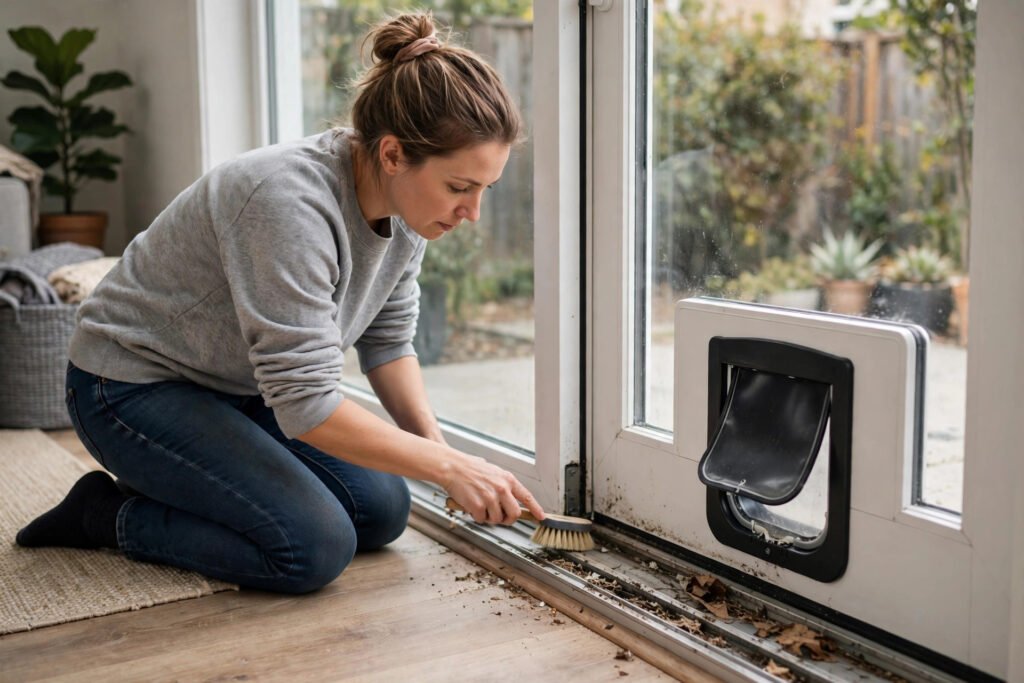
A sliding insert asks very little of you, but it does not ask nothing. It lives in the hardest-working few centimetres of your home: the track, where fine UAE dust settles daily, where sand arrives on shoes and paws, and where the seals that keep your cooled air in are flexed every time the door moves. Ten minutes of attention now and then is the whole secret. This guide sets out sliding insert maintenance and care as a simple routine — tracks first, seals second, flap third — plus the warning signs that tell you when maintenance stops being a DIY matter.
Why the track comes first
Everything an insert does well — standing firm, sealing at its edges, letting the door glide closed against it — depends on the track it shares with your sliding door. UAE dust is abrasive and mobile. It works into the channel, mixes with the grit carried in from gardens and balconies, and builds a grinding paste under the door’s rollers and around the insert’s feet. A door that once closed with a fingertip starts needing a shoulder. An insert that seated perfectly can sit a fraction high on a ridge of compacted sand, and a fraction is all a seal needs to leak.
So sliding insert maintenance starts at floor level. It is also, fortunately, the easiest part.
Sliding insert maintenance: the routine, step by step
Clear the track
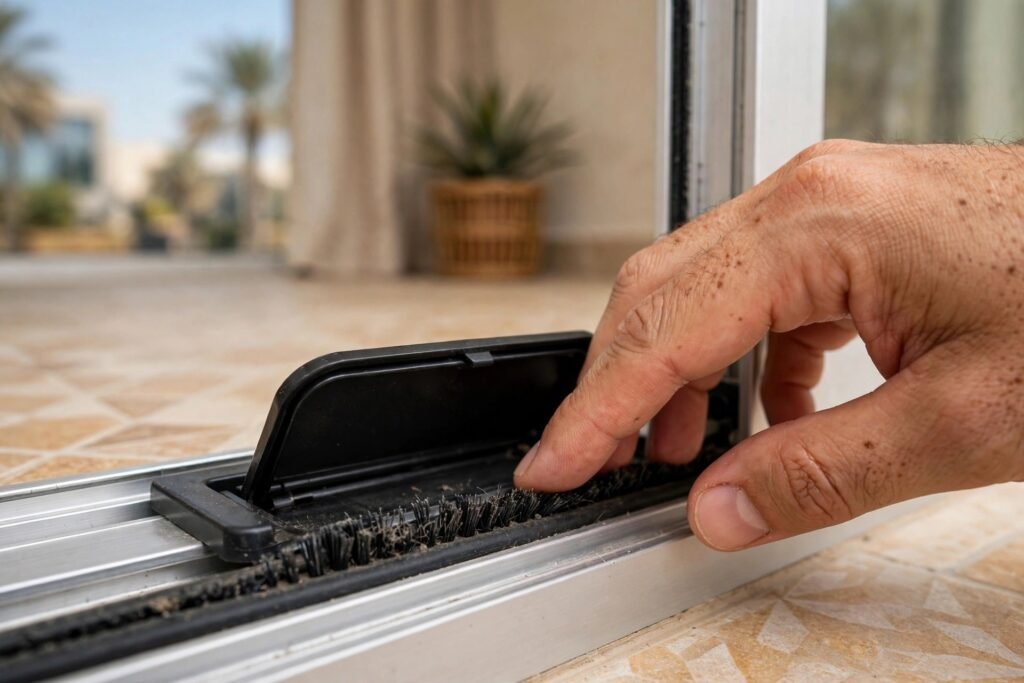
Open the door fully and vacuum the track channel with a narrow nozzle, then brush out what the vacuum leaves with a stiff hand brush or an old toothbrush along the corners. Wipe the channel with a damp cloth and let it dry. Work along the section where the insert stands as well as the door’s own run — grit does not respect the boundary. After a shamal or a dusty week, this two-minute job is worth doing even if the calendar says it is not due.
Check the seals
Run a hand slowly along the edges with the door closed. You are checking three things: the brush seal where the door meets the insert should feel continuous, with no flattened or missing stretch; the compression seals at the head and sill should still feel springy rather than hard and flat; and the flap should close fully and sit flush, held by its magnetic seal on dog doors from Hakuna Pets and PetSafe. Feeling a draught with the back of your hand on a windy day is the classic tell that one of these has stopped doing its job.
Wipe the flap and the glass
The flap itself just needs a wipe with a damp cloth — paw prints and dust film are cosmetic, but grit on the flap’s edge can hold it a hair off its frame and spoil the seal, so the edges matter more than the middle. The insert’s glass cleans exactly like the door beside it. Avoid abrasive pads on the aluminium frame and flap alike; the finishes you are protecting are the ones that keep the insert looking like part of the door.
Mind the rollers
The sliding door’s own rollers carry the door past the insert every day. If the door has become heavy, noisy or reluctant, the rollers are the usual suspects, and they were due attention whether or not an insert was fitted. A door running sweetly is part of insert care, because a slamming, dragging door is what knocks seals out of true.
Dust season and other UAE realities
The routine flexes with the climate. In the dusty months, track cleaning is a weekly habit in ground-floor villas and a fortnightly one in most apartments. Homes near construction or the desert edge will already know their own dust timetable. Two cautions are worth stating plainly. Do not flood the track with water to wash dust out — you will make mud in the channel and push grit into the rollers; vacuum and brush first, damp-wipe second. And be sparing with lubricants: heavy oils in a track collect dust and become the very grinding paste you are trying to avoid. If a door maker recommends a specific dry lubricant for its rollers, follow that; otherwise, clean and dry beats oiled and gritty.
Warning signs to call us about
Maintenance covers cleaning and checking. Call us when you find: a flap that no longer closes flat or has cracked at a corner; brush seals worn to a visible gap; the insert rocking or rattling in the track; or a draught you can feel at an edge you have cleaned and checked. Seals are renewable without replacing the insert, and a flap can be replaced in its panel — catching either early is cheaper in effort than living with a leaking door through a summer. If you are renting, none of this changes your position: the insert is still yours, lifts out at move-out, and the door underneath was never altered.
Frequently asked questions
How often should I clean the track?
In most UAE homes, a quick vacuum and brush of the track every couple of weeks keeps on top of it, with an extra pass after dust storms. Ground-floor villas and homes near open sand may need it weekly in the windy season. If the door starts to feel heavy, that is your reminder regardless of the calendar.
Can I jet-wash or hose the track clean?
We would not. Water plus fine dust makes an abrasive slurry that works into rollers and seal edges. Dry removal first — vacuum and brush — then a damp cloth gives you a cleaner result with none of the side effects.
The glass on my insert has gone cloudy with dust film. What should I use?
The same as the door glass beside it: water with a drop of washing-up liquid and a soft cloth or squeegee. The film is settled dust, not damage. Avoid scouring pads, which can mark the flap and the frame’s finish.
My flap does not snap shut any more. Is that maintenance or repair?
Start with maintenance: clean the flap edges and the frame it closes against, since grit and dust film are the commonest reasons a magnetic seal stops catching. If it still hangs or sits crooked after cleaning, the flap or its magnets are worn and it becomes a repair — a straightforward one, since the flap is a replaceable unit within the panel.
Does maintenance differ for a cat flap insert?
Very little. The same track, seal and flap routine applies, and microchip flaps from SureFlap and PetSafe benefit from a clean closing edge. Manual flaps, including Closer Pets four-way locking models, benefit in the same way. Keep the flap’s sensor area wiped clean on microchip models so it reads your cat’s chip without hesitation.
Keep it sliding, keep it sealed
Good sliding insert maintenance is mostly a brush, a vacuum and five minutes. If your checks turn up a worn seal, a tired flap or a rattle you cannot source, WhatsApp us a photo or a short video to +971 52 443 2655 and we will tell you whether it is a clean, an adjustment or a part. Prefer email? Write to admin@petdoorfix.com. We support inserts across Dubai, Abu Dhabi and all seven UAE emirates.
Instant WhatsApp Photo Quote
Send a photo of your door, your pet's size, and your area.
WhatsApp Photo QuoteNext guide: How to Get a Sliding Glass Door Pet Insert Installed the Same Day in Dubai & Abu Dhabi