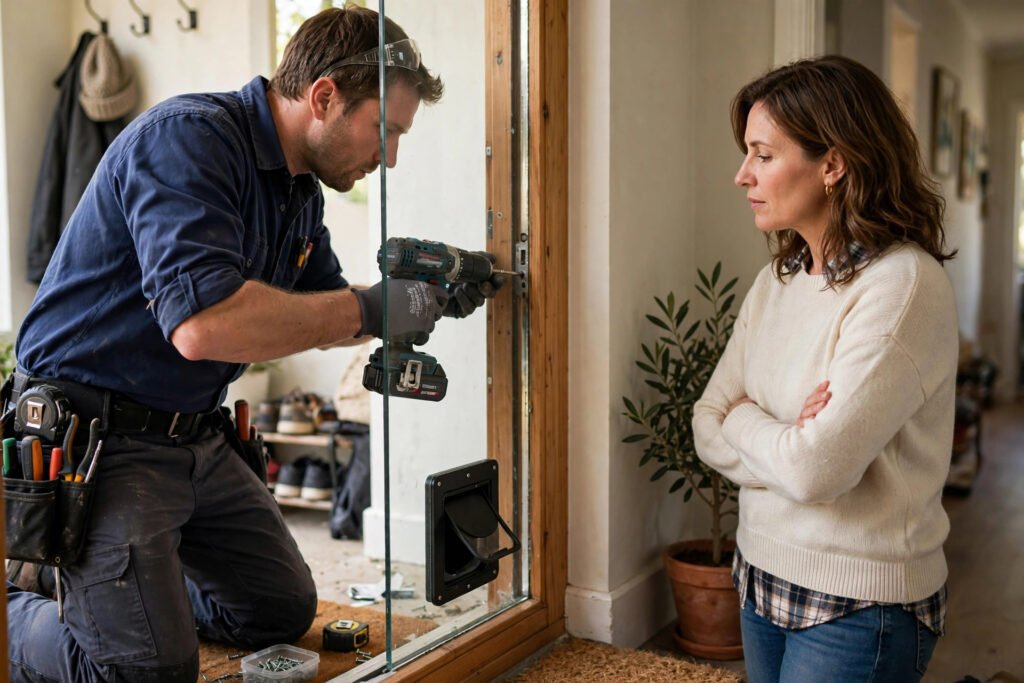
Booking a cat flap is easy; what most owners actually want to know is what the fitting day looks like. Will there be drilling? Dust? A hole in the house for hours? How long will the cat be shut away? The honest answers are reassuring: the messy work happens in the factory, not your living room, and most of the visit is measuring, fitting and checking. This walkthrough of the cat flap installation process — what happens on cat flap installation day, stage by stage — takes you from the first WhatsApp photo to your cat’s first trip through the finished flap.
Before the day: photos, breed and the right flap
The visit starts before we arrive. You send photos of the door or panel on WhatsApp, tell us your cat’s breed and weight, and we agree the route — a sliding door insert, a replacement glass panel, or a flap for a screen, wooden door or wall. Sizing is settled now, not on the day: any cat over 4 kg needs a Large flap, which catches out most British Shorthairs, Ragdolls and Maine Coons.
Brand choice is settled now too. SureFlap and PetSafe cover microchip models, which read the 15-digit ISO FDX-B chip your vet implanted, and manual models; Closer Pets flaps are manual four-way locking models only. If your door is a sliding insert in the standard white aluminium frame with clear glass, booking before 10 AM can mean same-day fitting. If you want the insert frame powder-coated to a custom RAL colour to match your door, that finish takes 2–3 days, so installation day is booked once the frame is ready.
The cat flap installation process, step by step
On the day, we start with a short survey: checking the door or panel against the measurements your photos suggested, confirming the step-over height for your cat, and agreeing the exact position. Then the route you chose takes over.
For a glass door, there is no cutting in your home. Your new double-glazed panel — factory-made with the flap already fitted — is swapped in for the original, or the sliding insert is set into the track. For a screen door, the framed opening is fitted into the mesh. For wooden doors and walls, this is the stage where the opening is made, and you should know those two routes are permanent alterations, unlike glass.
With the unit in place, we seal and finish the edges, then test the flap through its full swing: it must fall shut on its own, the magnets must pull it closed, and the draught seal must sit evenly all round. On a reflective glass panel we also check the match with you in daylight — we match reflective coatings as closely as possible, but an identical shade to the original supplier’s glass cannot be guaranteed 100%.
What we need from you on the day
Very little. Clear access to the door, somewhere for us to work, and your cat kept in another room while the door is open and tools are out — most cats vote with their feet and hide anyway. Keep the cat’s litter tray, food and water in the room with them if the fitting runs over an hour. That is the whole of your job list.
The first trip through the flap
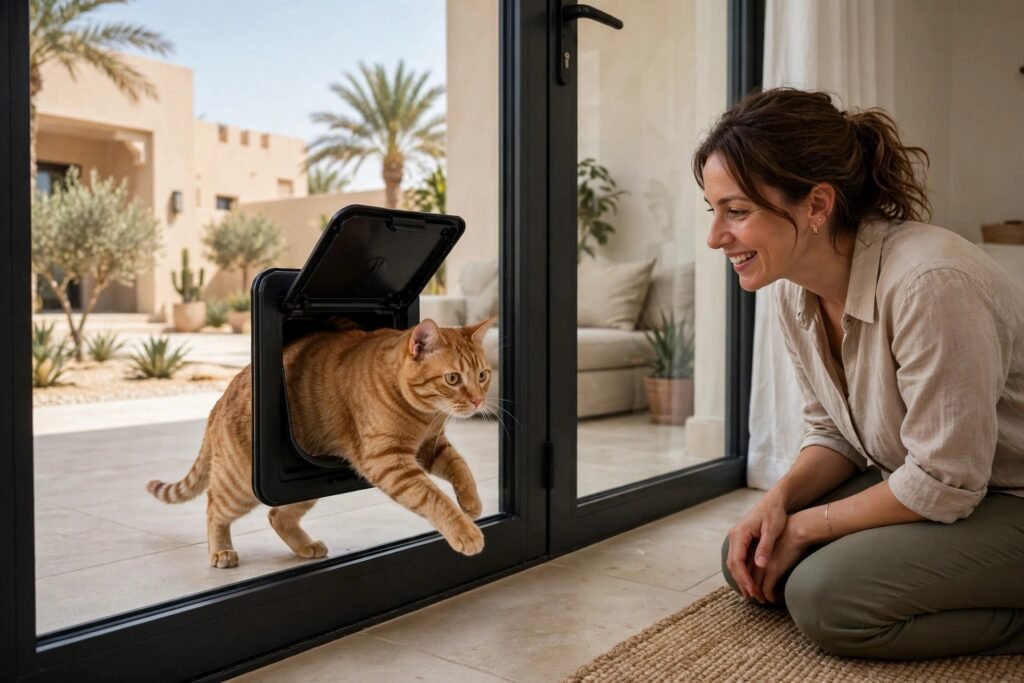
Once the seal check passes, the flap is your cat’s. We never force a cat through. The first passes go best with the flap held or taped up so the cat walks through the open tunnel, then with the flap lowered so a gentle push earns the treat on the other side. Most cats are using it independently within a day or two; cautious cats take a little longer, and that is normal.
Afterwards: glass stored, deposit safe
If we replaced a glass panel, your original uncut panel is stored safely, ready to be swapped back in 30 minutes when you move out — no landlord NOC needed, and nothing about the fitting shows. Keep the fitting day photos and the panel details somewhere safe, and give the flap its first clean in a month or so to keep dust out of the pivot and magnets.
Frequently asked questions
How long does a cat flap fitting take on the day?
The on-site visit is a matter of a survey, the fit itself and final checks — most of the time is spent positioning and sealing carefully rather than on heavy work, because glass panels and inserts arrive ready-made. Wooden door and wall openings take longer, as the opening is made on site.
Do I need to keep my cat away during the fitting?
Yes, please. Doors stand open and there are tools around, so shut your cat in another room with its tray, food and water until we are finished and the flap is ready for its first supervised passes.
Can my cat flap be fitted the same day I enquire?
A sliding door insert in the standard white aluminium frame with clear glass can be fitted the same day if you book before 10 AM. A custom RAL powder-coated frame takes 2–3 days to finish, and factory-made glass panels are scheduled once they are fabricated.
Will the new panel match my reflective glass?
We will show you the closest match before anything is final. Reflective coatings vary between original glass suppliers, so an exactly identical shade cannot be guaranteed 100% — we would rather be straight about that than promise a perfect match.
What happens to my original glass panel?
If a panel was replaced, the original is kept safely in storage and swapped back in 30 minutes at move-out, leaving the property as it was found. Inserts simply lift out of the track. No landlord NOC is needed for either.
Book your fitting day
That is the whole cat flap installation process — photos and sizing first, a tidy fitting visit, and a cat using its own door by the evening. Send us your door photos and your cat’s breed and weight on WhatsApp at +971 52 443 2655 and we will confirm the route and the flap size before booking you in, or email admin@petdoorfix.com. We install across all seven UAE emirates.
Instant WhatsApp Photo Quote
Send a photo of your door, your pet's size, and your area.
WhatsApp Photo QuoteNext guide: Is a Standard Cat Flap Too Small? Why Any Cat Over 4 kg Needs a Large Cat Flap