
“Fitting a flap means cutting the unit, and a cut unit mists up — doesn’t it?” It is one of the most reasonable concerns owners raise, because most people have seen misted double glazing somewhere: a cloudy pane, moisture beading where no cloth can reach it. The short answer is that the misting they are picturing has a specific cause, and a properly made pet door unit does not have it. This article separates the two kinds of condensation, explains pet doors and double glazing condensation without the sales gloss, and states plainly where double glazed pet door condensation can still appear and why it is not a fault.
Two completely different kinds of condensation
Moisture on the room-side surface
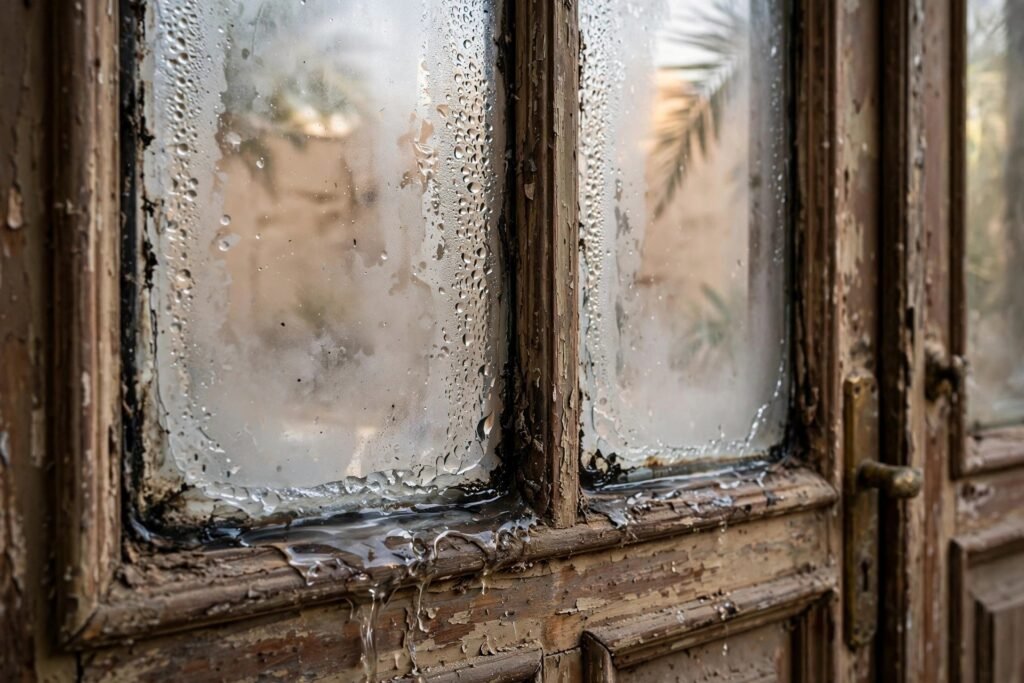
This is the familiar kind: the inner face of the glass fogs or beads with water, usually on a humid day, near a kitchen, or when warm moist indoor air meets a cooler pane. You can wipe it away. It is surface physics — water vapour in the room condensing on the coldest surface available — and it happens on ordinary windows, mirrors and plain double glazing with no pet door anywhere near them. It says nothing about the health of the unit.
Misting inside the unit
The cloudy pane people worry about is different: the moisture is between the two panes, inside the sealed cavity, and no amount of wiping touches it. That is a failed sealed unit. The perimeter seal has degraded — with age, heat cycling or a manufacturing flaw — humid air has crept into the cavity, and the desiccant inside the spacer bar that once absorbed trace moisture is saturated. The unit has not been “breached by a hole”; its edge seal has simply reached the end of its life.
Why a fabricated pet door unit is not a breached unit
The fear makes sense only if the flap were cut into a finished unit — which cannot be done at all, because tempered glass shatters if you try. A pet door unit is fabricated from the beginning as a unit with a flap in it: the aperture is formed in each pane before tempering, the flap is fitted and sealed at the bench, and then the two panes are assembled with their spacer bar and perimeter seals in the normal way. The cavity between the panes is sealed and dry when the unit leaves the bench, exactly like the standard replacement unit it resembles in every other respect. The flap passes through both panes; it does not open the cavity to the room or the weather. Structurally, there is no breach for moist air to exploit.
It is also worth separating the flap itself from the unit. The flap is an appliance mounted in the glass. Its frame is sealed to the panes, and it opens and closes as your pet passes. Nothing about that path leads into the sealed cavity between the panes.
Double glazed pet door condensation: where it can still appear
A pet door does not cause inside-unit misting, but two surface effects are real. First, the flap panel is typically a thinner, lighter construction than the glazed unit around it, so on a humid morning it can be one of the cooler surfaces in the room and collect a film of surface condensation sooner than the glass does. That wipes off and means nothing. Second, each time a pet pushes through on a muggy day, a small exchange of humid outdoor air happens — the same exchange any open door makes. Neither is the unit failing. Persistent mist between the panes of a unit we have fitted would be a seal problem, and it is the one thing that should be reported rather than lived with — just as it should with any double glazing, pet door or not.
Practical habits keep surface moisture down: run the AC or ventilation so indoor humidity does not build up, avoid drying laundry against the glass, and wipe the flap’s edges when you clean the glass so dust does not hold moisture against the seals.
If your existing unit is already misted
Here the news is genuinely good. If the double-glazed panel you want the flap in has already failed — misted, cloudy, seals gone — then having a pet door unit fabricated replaces that panel wholesale. The misted unit comes out, your new sealed unit with its flap goes in, and the condensation problem leaves with the old glass. Owners sometimes time the two jobs together for exactly this reason, and your original unit — misted or not — is still removed intact and stored, so a rental property can be handed back with its original glass refitted in about 30 minutes at move-out, no landlord NOC involved.
Frequently asked questions
So will fitting a pet door make my other windows mist up?
No. Nothing about a pet door changes the humidity in your home or the seals of your other units. If several units mist inside at around the same age, that is their seals reaching the ends of their lives together, which happens in buildings where all the glazing was installed at once.
How can I tell surface condensation from a failed unit?
Touch it. If the moisture is on the room-side face and wipes away, it is surface condensation. If the cloudiness sits between the panes — visible but untouchable from either side — the sealed unit has failed. Morning surface fog that clears as the room warms is normal; a permanent milky patch is not.
Does the flap let moist air into the sealed cavity?
No. The cavity is sealed around the unit’s perimeter at fabrication, and the flap is mounted through the aperture in the panes, sealed to the glass. The air path through a flap leads from your room to outside and back — never into the cavity.
My villa’s units mist in summer humidity. Does a new unit fix that?
If the misting is inside the old unit, yes: a new sealed unit with a dry cavity replaces it. If the misting is on the room-side surface, a new unit will not change your indoor humidity — but we can tell you which kind you have from a photograph, before you spend anything.
What if a unit you fitted ever mists inside?
Tell us. Inside-unit misting means the perimeter seal has failed, and it should be assessed as a glazing fault in its own right. It is not something owners are expected to accept as a side effect of having a pet door.
Not sure which kind of condensation you have?
Photograph it. WhatsApp a picture of your misted or fogged panel to +971 52 443 2655 and we will tell you whether you are looking at surface moisture or a failed sealed unit — and whether double glazed pet door condensation is something a new fabricated unit would solve for your door. Prefer email? Write to admin@petdoorfix.com. We work across Dubai, Abu Dhabi and all seven UAE emirates.
Instant WhatsApp Photo Quote
Send a photo of your door, your pet's size, and your area.
WhatsApp Photo QuoteNext guide: Sound Insulation and Double-Glazed Pet Doors: What Changes and What Doesn’t