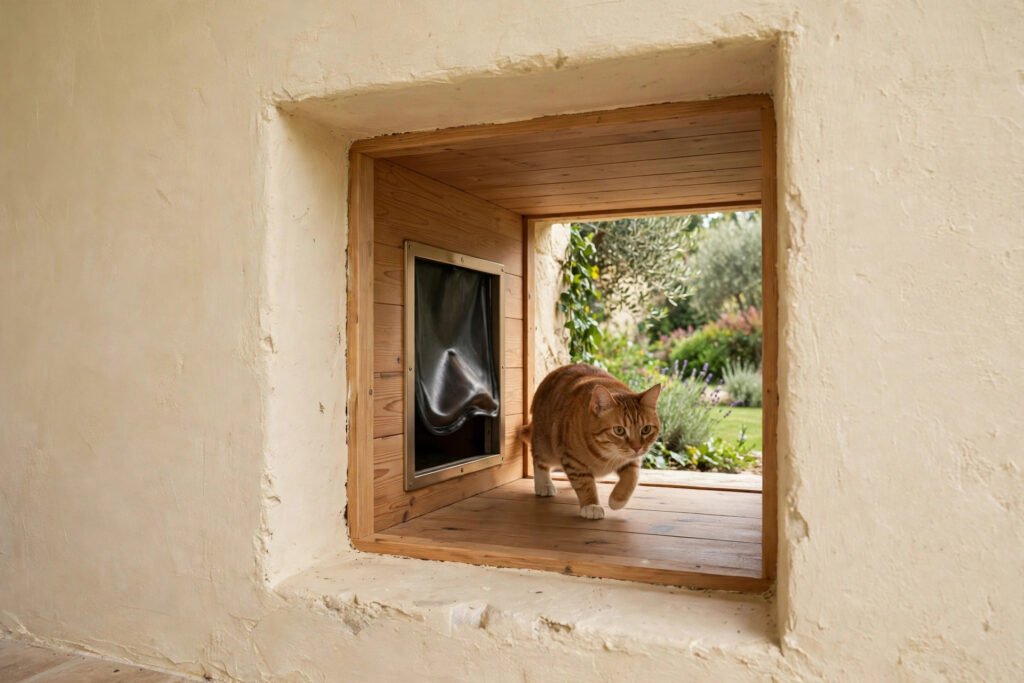
Not every cat flap leads outside. In UAE homes, some of the most appreciated flaps we fit are in interior wooden doors — between a bedroom and the rest of the home, or into the bathroom or laundry room where the litter tray lives — because they solve a nightly problem: a cat that needs access on one side of a closed door, and owners who need that door closed. A cat flap in door joinery inside the home — a bedroom or bathroom door — is the one fitting that has nothing to do with glass.
See our guide to screen, wooden door & wall pet doors for the full service.
Why interior doors become a problem
The pattern is familiar to almost every indoor-cat household here. The bedroom door is closed at night, for air conditioning, privacy and quiet. The cat, which regards the whole home as its territory, wants through — to reach its litter tray, its water, or simply to patrol and return. What follows is scratching at the door in the night, meowing at the gap underneath, and an owner opening the door at 3 a.m. in a way that helps no one’s sleep.
Leaving the door ajar is the usual compromise, and a poor one in the UAE. An open bedroom door lets cooled air spill out all night and lets corridor light and household noise in. The cat gets its route; the room loses the point of having a door.
The doors owners ask about most
Bedroom doors
This is the classic fitting. A flap set low in the bedroom door lets the cat come and go while the door stays shut and latched. The AC stays in the room, the light stays out, and the scratching stops because the cat no longer needs to ask. For cats that sleep on the bed for part of the night and wander for the rest, it ends the nightly door duty for the owner entirely.
Bathroom and laundry doors
The second request is litter access. Many owners prefer the litter tray out of living space — in a bathroom, a laundry room or the maid’s room — behind a door that stays closed to contain odour and keep a tidy home looking tidy. Without a flap, that closed door cuts the cat off from its own tray, which is how accidents and stressed cats happen. A flap in that door gives the cat a permanent, private route to its tray while the door keeps the rest of the room’s business contained.
Our service page covering wooden and interior door cat flap fitting sets out interior doors alongside screen doors, exterior wooden doors and wall fittings, so you can see where an interior flap sits in the wider range.

What fitting an interior flap involves
An interior flap is measured and fitted into the lower panel of the wooden door, at a step-over height your cat can manage comfortably, with the frame seated neatly so the door still opens, closes and latches exactly as before. The door comes off its hinges for the work and goes back the same day, and the opening is finished with the flap’s frame on both faces rather than left as a raw hole.
Position is decided with the cat in mind. The bottom of the flap sits low enough for an easy step through, and the top clears the cat’s back without crouching. On a panelled door, the flap is placed within a panel where the door’s construction allows, which is why a photo of both sides of the door is the starting point for every interior fitting.
Choosing a flap for an inside door
Selective entry is rarely the issue indoors, so a manual four-way locking flap is usually the right tool: set it to in only, out only, fully open or fully locked, depending on the hour. Owners lock it when the bedroom is being cleaned, when guests with allergies are staying, or when the cat is confined to one side for a vet visit the next morning — and leave it open the rest of the time.
For those flaps we supply Closer Pets, which is manual four-way locking only, and manual models from PetSafe. Where a household does want one cat kept out of a specific room — a nursery, or a room where another pet is fed — microchip models from SureFlap and PetSafe, which read the cat’s existing veterinary chip, can be discussed for that door instead.
Size follows the same rule as every door in the home: any cat over 4 kg needs a Large flap, which covers most British Shorthairs, Ragdolls, Maine Coons and well-built adult Arabian Maus. An interior flap that is too small will simply move the scratching problem from the door face to the flap itself.
Renting? One honest difference to know
Our glass and sliding-door work is 100% rental-friendly because nothing original is cut: your glass is stored and swapped back in 30 minutes, and an insert lifts out of its track. An interior wooden door is different. Fitting a flap means cutting an opening in that door, and the door cannot be returned to its uncut state afterwards.
So if you rent, check with your landlord before fitting an interior flap, or talk to us about the rooms where a no-cut option works instead. If the door is your own, the point does not arise — but we would rather state it clearly before the fitting than have it surface at move-out.
Frequently asked questions
Will a flap stop my cat scratching the bedroom door at night?
That is exactly what it is fitted for. The scratching is a request to be let through; once the cat has its own route through the closed door, the request — and the scratching at that door — stops.
Does the bedroom door still work normally with a flap in it?
Yes. The flap sits in the lower panel, and the door opens, closes and latches as before. The flap is also lockable, so you can close the route completely whenever you need to.
Which flap type suits an interior door?
Usually a manual four-way locking flap from Closer Pets or PetSafe — you set it to in only, out only, open or locked. Microchip models from SureFlap and PetSafe are an option where one particular cat must be kept out of a room.
Can a flap go in a bathroom or laundry door too?
Yes. Bathroom, laundry and maid’s room doors are common fittings, usually so the cat can reach a litter tray kept behind a closed door. The same measuring and sizing rules apply as for a bedroom door.
What size flap does my cat need?
If your cat weighs over 4 kg, it needs a Large flap. Send us the breed and approximate weight with your door photos and we will confirm the size before the fitting.
Add a flap to your interior door
WhatsApp a photo of both sides of the door to +971 52 443 2655, tell us which room it leads to and your cat’s approximate weight, and we will confirm the right flap and fitting. You can also email admin@petdoorfix.com. We fit interior door flaps across all seven UAE emirates, in villas and apartments alike. Chosen knowingly, a cat flap in door woodwork is a small, permanent convenience that many cat households would not be without.
Instant WhatsApp Photo Quote
Send a photo of your door, your pet's size, and your area.
WhatsApp Photo QuoteNext guide: Pet Doors Through Walls: How a Wall Tunnel Door Works